|
|
|
|
|
|
|
Corn Growers in Virginia Face Extraordinarily Difficult Harvest Season |
|
|
|
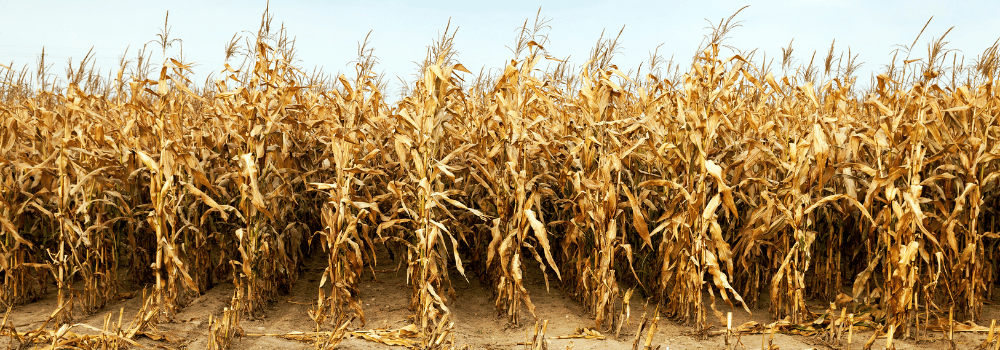
Farmers across the country are feeling the painful effects of a dry, unpredictable growing season – and corn farmers in Virginia are no exception.
Because of an intense drought in June, corn growth was stunted – leaving them susceptible to pathogens and other problems. It didn’t help when, in July, the rain came and got trapped within the ears of corn that stood at 90 degrees instead of tipping over – creating the ideal scenario for mold and smut. Crop insurers in Virginia have estimated that 60% of the state’s corn crops are considered poor or very poor quality. Some farmers estimate that only about a quarter of what they planted can be sold. |
|
|
|
|
|
But that isn’t the only problem plaguing corn farmers. Besides damage leaving only about 1 in 3 ears of corn that appears to be good quality, even those rare few can still be deemed unable to sell because of toxins. A naturally occurring mold, aflatoxin, is extremely poisonous to mammals – and it’s showing up in the corn harvest. Even yields that appear to be healthy have tested at nearly 190 parts per billion for aflatoxin, resulting in rejection from elevators.
The hits keep coming, because beyond these extreme challenges, there just also isn’t enough yield to make it all worthwhile. Crop insurers estimate that corn fields are currently averaging just 50 bushels an acre. Purchasing prices are also quite low. All together, the nightmare trifecta (damage, toxins, and low yield) has made for a particularly miserable year for corn farmers. Many are choosing to do the only thing they can – looking forward to next year with hope, optimism, and a solid dose of anxiety.
|
|
|
|
|
|
|
|
Maryland Department of Agriculture Urges Continued Biosecurity Measures for Poultry Farms |
|
|
|
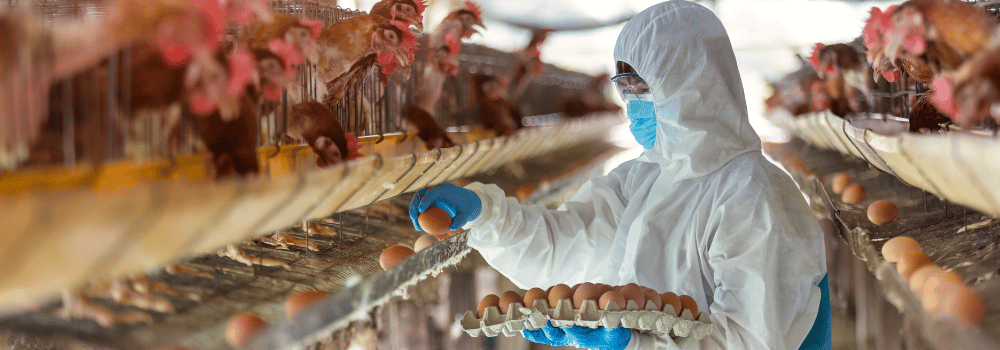
The Maryland Department of Agriculture is reminding Maryland poultry farmers to remain vigilant and practice enhanced biosecurity on their farms as the annual fall migration gets underway. Cases of Highly Pathogenic Avian Influenza (HPAI) continue to be detected in wild birds and poultry flocks in the Atlantic Flyway. |
|
|
|
|
|
Growers are urged to follow these minimum guidelines to maintain a sanitary, biosecure premise:
-
Restrict access to poultry by posting “Restricted Access” signage, securing the area with a gate, or both.
-
Take steps to ensure that contaminated materials on the ground are not transported into the poultry growing house or area.
-
Provide the following items to anyone entering or leaving any area where poultry are kept:
-
Footbaths and foot mats with disinfectant;
-
Boot washing and disinfectant station;
-
Footwear change or foot covers.
-
Cover and secure feed to prevent wild birds, rodents or other animals from accessing it.
-
Cover and properly contain carcasses, used litter, or other disease-containing organic materials to prevent wild birds, rodents or other animals from accessing them and to keep them from being blown around by wind.
-
Allow MDA to enter the premises during normal working hours to inspect your biosecurity and sanitation practices.
-
Report any unusual bird deaths or sudden increases in very sick birds to:
-
Read up about HPAI and biosecurity measures on the MDA website.
The USDA Animal and Plant Health Inspection Service’s website Defend the Flock and the University of Maryland Extension programs have many valuable resources available for poultry owners, including a variety of instructional videos, to help mitigate the risk of HPAI on their operation.
For more information on avian influenza, please visit the department’s website.
Partially reprinted courtesy of Maryland Department of Agriculture. |
|
|
|
|
|
DDA Teams Up With Division of Small Business to Broaden Lending Opportunities for Farmers |
|
|
|
|
|
The Delaware Agricultural Financing Program (DAFP) was launched recently on September 3, 2024. This joint effort between the Delaware Department of Agriculture (DDA) and the Division of Small Business hopes to attract new farmers and producers into Delaware's top industry -- a critical need for the state. The new loan program aims to help farm and aquaculture producers purchase the equipment needed to get started or expand their businesses. Farmers, producers, and food processors engaged in crop, livestock, aquaculture, and food production currently operating in Delaware are eligible to apply.
The loans are low-interest (3.35% for first-time farmers and 4.25% for all future projects) and can be used for production, processing, packaging, aggregation, and distribution for small and large operations alike. Currently, $1.5 million in funding is available, and loans of $25,000 to $250,000 will be given to help sustain farmers' livelihoods and contributions to Delaware's economy.
Interested in applying for one of these DAFP loans? Find more information and apply by clicking the button below: |
|
|
|
|
|
|
|
|
|
|
|
|
|
|
|
Farm Spotlight
Turtle Creek Farm - Seaford, DE |
|
|
 |
|
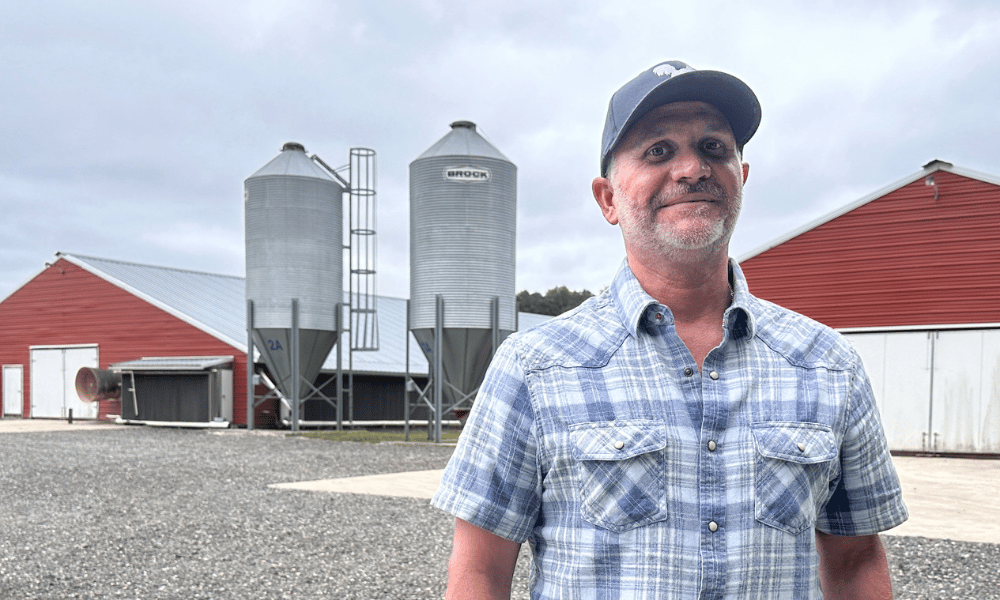
Owner & Manager Matt Tull on Turtle Creek Farm |
|
|
|
To the southwest of Seaford, Delaware, Matt Tull operates 2 farms in close proximity. One, Woodpecker farm, is leased. The other is Turtle Creek Farm: built by Matt after 10 years working in a processing plant. As a new father, it was ideal to work for himself and be able to spend so much time at home with his daughter -- who was just 18 months old when Turtle Creek was built. The freedom to set your own schedule and flexibility of farm life is one of the things Matt is most grateful for as a poultry farmer. |
|
|
 |
|
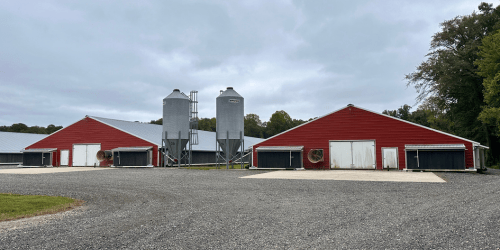
2 of Turtle Creek's Poultry Houses |
|
 |
|
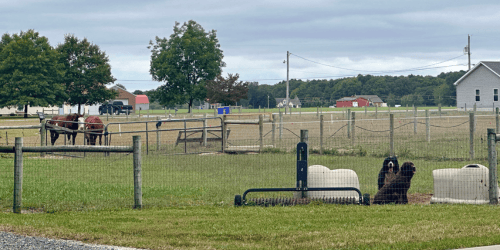
Dogs and horses on the farm |
|
|
|
The land itself has been in the Tull family for generations, going back to the 1800s, at least. Matt's great grandfather divided up his land and shared it amongst family, so all of the nearby homes are owned and occupied by relatives. After attending DelTech for poultry science, completing an internship at Allen's in Hurlock, and subsequently working in a poultry plant for a decade, deciding what to do with Matt's piece of land was an easy choice. Turtle Creek Farm now houses 157,000 broiler hens -- and another 175,000 are cared for by Tull across the way at Woodpecker Farm.
While luckily, Matt himself has not had to deal with the avian flu sweeping nearby areas, he has felt the impact. Longer layout wait times have been common with other farms having a more urgent need as a result of the disease. However, he has taken it in stride as part of the gig of a farmer. His advice to prospective new farmers is: the only thing that is certain is uncertainty, and there are no guarantees in farming. He encourages everyone to do their research and have a strong grasp of what they're getting into before they start their endeavor.
However, the payoff is a life surrounded by and in touch with nature, with the freedom and flexibility to take charge of your own life. Tull thinks it's well worth it, and has no intentions of change in the near future. |
|
|
|
Matt and the Tull family, thank you for taking the time to connect with us. We are grateful you have allowed us to learn and share the history of your family farm.
Thank you for being a loyal PepUp customer! |
|
|
|
|
|
KEEP UP WITH THE TRI GAS FAMILY OF COMPANIES ON SOCIAL MEDIA! |
|
|
|
|
|
|
|
|