|
|
|
|
|
|
|
DDA to Stop Issuing Interstate Health Certificates |
|
|
|
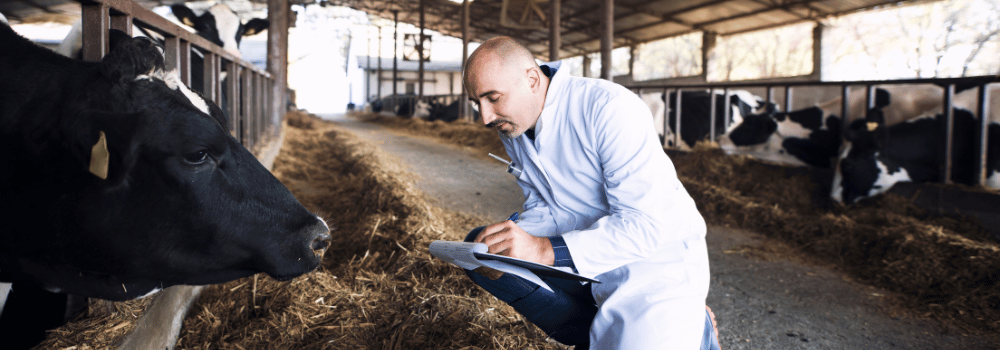
The Delaware Department of Agriculture (DDA) announced their intention to stop issuing interstate certificates of veterinary inspection (CVI), also known as health certificates. While a CVI is not necessary for animals staying in Delaware, animals traveling across state lines for any purpose must have one. This may worry farmers here on Delmarva, a tri-state area with tons of intermingling business. However, the alternative might actually be better for everyone.
|
|
|
|
|
|
By no longer issuing CVIs, the DDA hopes to encourage farmers to establish a relationship with a licensed, clinical veterinarian at a private practice for both routine and emergency care needs. Large-animal veterinarians and DDA have been working together since 2023 to slowly transition livestock owners to the new routine: in 2022, DDA issued 153 CVIs while private practices issued just 35. In 2024, the ratio flipped; DDA issued just 32 health certificates, while private practices issued 199.
By issuing these certificates out of a clinical veterinary office instead of the DDA, livestock can receive more consistent and personalized care. If your animal(s) gets sick at a show, you already have an established veterinarian to take them to. Overall, the change reduces competition with local vets, improves livestock outcomes, and frees up DDA resources for other endeavors that help farmers. |
|
|
|
|
|
|
|
Proposed Maryland Senate Bill 931 Faces Strong Opposition on the Eastern Shore |
|
|
|
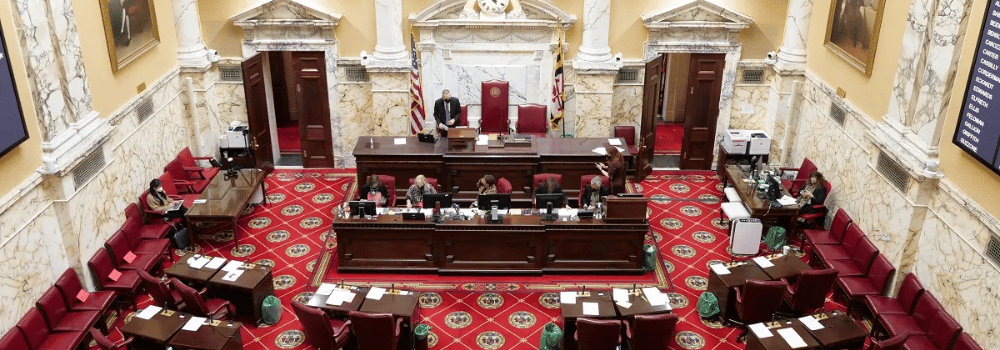
The State of Maryland has proposed a bill regarding the construction of new solar farms. Senate Bill 931 would give the State of Maryland the final say in solar projects, effectively removing the ability for local governments to prevent projects from moving forward.
|
|
|
|
|
|
Supporters of the bill claim that Maryland is lagging behind in energy, and that unnecessary zoning laws are preventing solar companies from further developing clean energy. The bill's founder, Sen. Brian Feldman (D-Montgomery), notes that a "primary chokepoint in getting renewable energy projects built is siting and permitting, and local governments have a lot of respect that they cannot have de facto veto authority over our attempts at the state level to increase our supply of in-state energy, to address our resource adequacy challenges.”
Opponents of the bill, including the Delmarva Chicken Association (DCA), argued that local government should retain control over local land. Tyler Hough of the Maryland Farm Bureau points out: “Prime and productive soil is the one resource that we cannot replace. Without this soil, we don’t have farms. Without farms, we don’t have food." Additionally, with electric companies like Delmarva Power facing allegations of price gouging and monopolization as of late -- local residents remain wary of the pitfalls of total electrification.
Senate Bill 931 has passed through both chambers. It is now up to Governor Wes Moore to either sign or veto the bill. If passed, it would be effective on October 1, 2025. Track the current status of the bill below: |
| STATUS TRACKER: SB0931 |
|
|
|
|
|
Bovine H5N1 Nasal Vaccine in the Works |
|
|
|
|
|
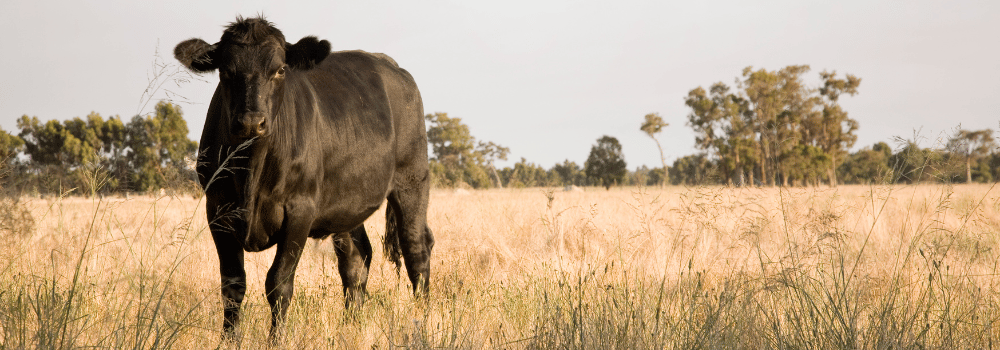
The University of Maryland and USDA's Agricultural Research Service are working together to develop a nasal vaccine to protect dairy cattle from bird flu. $650,000 was granted from the USDA's National Institute of Food and Agriculture for this project. By preventing the transmission from cows to people, infectious disease experts hope to lessen the chances of an evolved, human version of the virus. The nasal spray vaccine could potentially be used for humans, as it was originally developed for COVID-19 and influenza. It works by delivering a protein to the nasal passages that blocks viruses from infecting cells in the respiratory tract. |
|
|
|
|
|
|
|
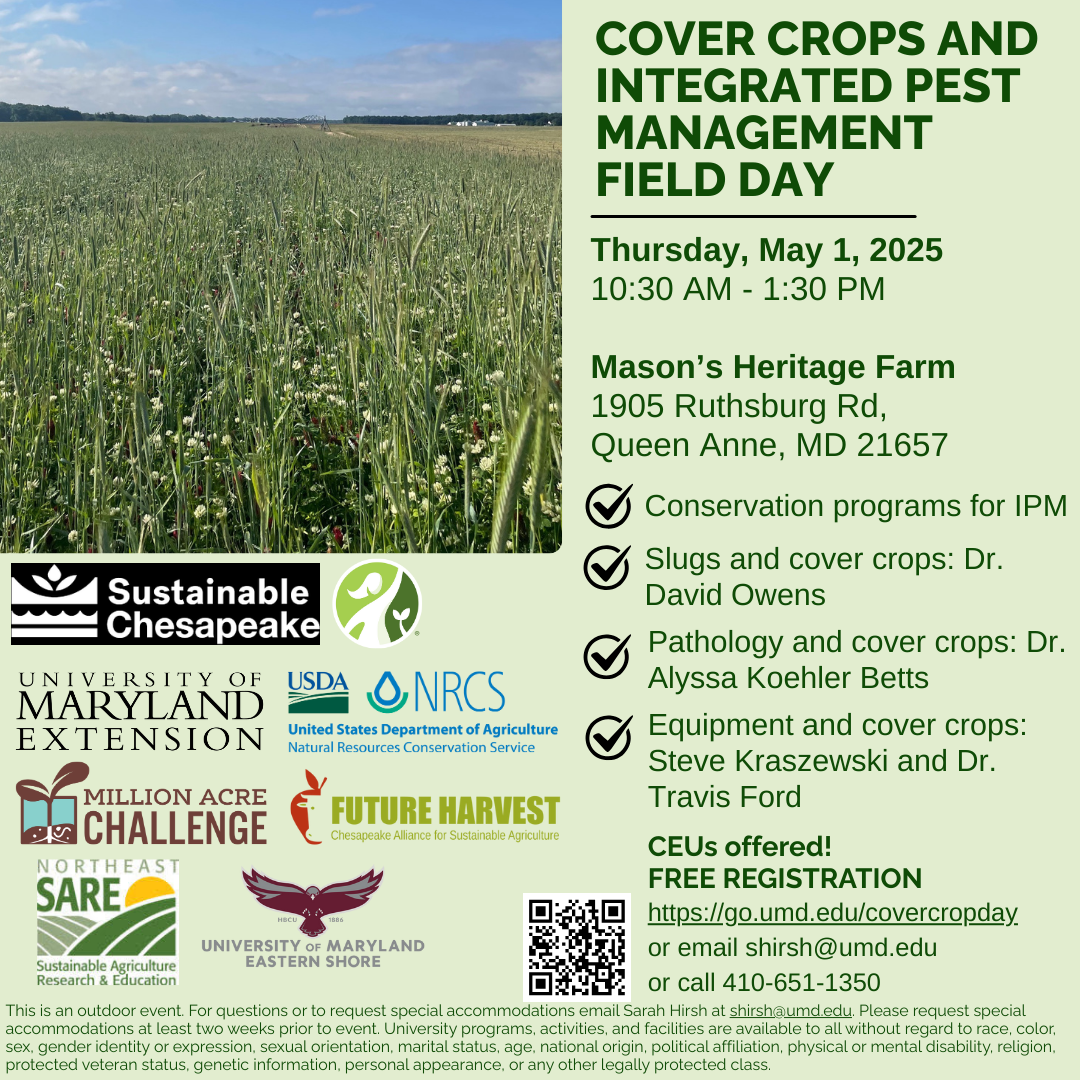
Cover Crops & Integrated Pest
Management Field Day |
|
|
|
|
|
This is a free event, and lunch included. The agenda topics are:
-
Conservation Programs for IPM
-
Slugs and Cover Crops
-
Presented by Dr. David Owens
-
Slug management and the effect of late spring cover crops on slugs and natural enemies
-
Can slugs and late-spring cover crops coexist?
-
Pathology and Cover Crops
-
Presented by Dr. Alyssa Koehler Betts
-
How cover crops affect pathology and nematodes
-
Effects of brassicas and mustards
-
Interaction of Pythium and things to watch for with cover crops
-
Equipment and Cover Crops
-
Presented by Steve Kraszewski and Dr. Travis Ford
-
Planting green equipment
-
Equipment considerations for cover crop planting and termination
-
Timing of different implements and field passes
-
Continuing Education Credits Offered:
-
MD Pesticide - 6 Credits in 1A, 10, CORE, PVT
-
MD Nutrient Management - 2 Hours
-
DE Nutrient Management - 3 Hours
-
DE Pesticide - 3 Credits in 1A, 10, CORE, PVT
-
Certified Crop Advisor (CEUs) - Integrated Pest Management: 1.5 Credits, Crop Management 1 Credit
|
| REGISTER ONLINE |
|
|
|
|
|
|
|
For 11 years, the Delaware Farm Bureau (DEFB) Foundation’s Annual Milk Run/Walk 5k has raised funds to help children have access to milk and many other healthy food options through the Ministry of Caring’s Milk for Children Fund and the Food Bank’s Backpack program.
The Delaware Farm Bureau Foundation’s 12th annual Milk Walk/Run 5k is scheduled this year for Saturday, May 4 at Ramsey’s Farm in Wilmington. Registration is $30 per runner through April 26th and $35 each after that date. Day of registration opens at 8:00 am and the race begins at 9:00 am.
New this year, DEFB Foundation will be awarding a best costume award! Participants are encouraged to dress in their best cow costume. The winner will receive four quarts of Woodside Creamery ice cream.
The annual Milk Run, managed by Fusion Racing, benefits the DEFB Foundation, as well as the Ministry of Caring’s Milk for Children Fund and the Food Bank of Delaware’s Backpack Program. Over the years, the Milk Run has raised more than $200,000 with proceeds split amongst the three groups.
The Milk Run/Walk is open to everyone, walkers and runners of all ages! Prizes will be awarded to the winners of numerous categories. |
|
|
|
|
|
|
|
Farm Spotlight
Little Bohemia Creek Farm - Kennedyville, MD |
|
|
|
|
|
All the way up in Kennedyville, Maryland, Little Bohemia Creek Farm grows corn, wheat, soybeans, barley, and processes lima beans on about 3,000 acres. Farmer Jonathan Quinn and his family have been working the land for generations, with both of his paternal great grandfathers having been local farmers themselves. Each generation has found a satisfying purpose in their work -- Jonathan shared that one of his favorite parts of the job is the tangible, practical outcome, from planting the seeds in spring to finally harvesting a crop in the fall. |
|
|
|
|
|
It's not all happy go lucky, though. All farmers know the challenges of staffing and labor, unpredictable weather and crop prices, and environmental regulations. Currently, Jonathan notes that crop prices are lower than they have been the past few years; but that they're holding better than many expected amidst tariff chaos. He's hoping for good weather and a strong output this year to help offset rising costs and decreasing sale prices.
His plans for the future include his daughter and son-in-law, who both work part time helping out on the farm. His daughter is an assistant pastor at a local Presbyterian church for her day job, but she also balances the farm books for her dad. Her husband runs the paramedic program in Kent County and helps out with labor when he's able, as does Jonathan's son. While the next generation of Quinns do have careers outside of the farm, they strike a balance that allows them to be involved without too much pressure -- something Jonathan always hoped for.
With himself and his family being so involved in the community, it's no surprise that he said it's one of the most important things for new farmers to do right away. Whether it's the Farm Bureau on a county or state level, a soybean association, or leadership programs; there are plenty of ways to get involved and build local relationships. Jonathan says that a lot of older farmers are willing to share their wealth of knowledge and give sound, experienced advice -- if only new farmers are willing to take it. |
|
|
|
|
|
Jonathan and the Quinn family, thank you for taking the time to connect with us. We are grateful you have allowed us to learn and share the history of your family farm.
Thank you for being a loyal PepUp customer! |
|
|
|
|
|
KEEP UP WITH THE TRI GAS FAMILY OF COMPANIES ON SOCIAL MEDIA! |
|
|
|
|
|
|
|
|